
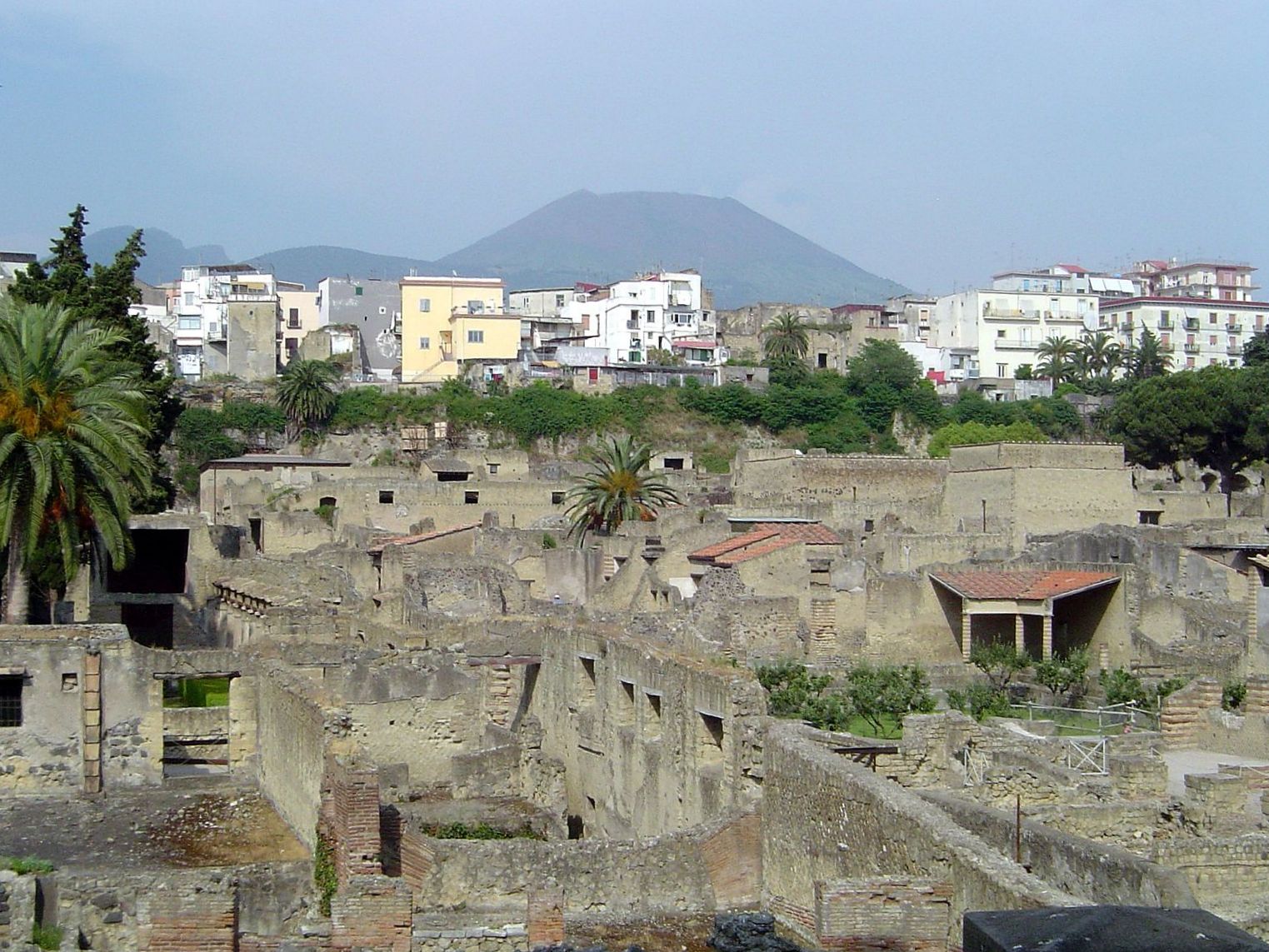
Herculaneum and Mount Vesuvius. Wikipedia
On until October 18 in Rome’s Castel Sant’Angelo is “Herculaneum: The Art of Living”, an exhibition of over 70 archeological finds; many come from the deposits of Herculaneum’s Archeological Park and are exhibited here for the first time. Inspired by the exhibition “From the Egg to the Apple: The Civilization of Food and the Pleasures of the Table” held last year in Herculaneum’s Villa Campolieto, “Herculaneum: The Art of Living” extends the story from food to the entire experience of everyday life.
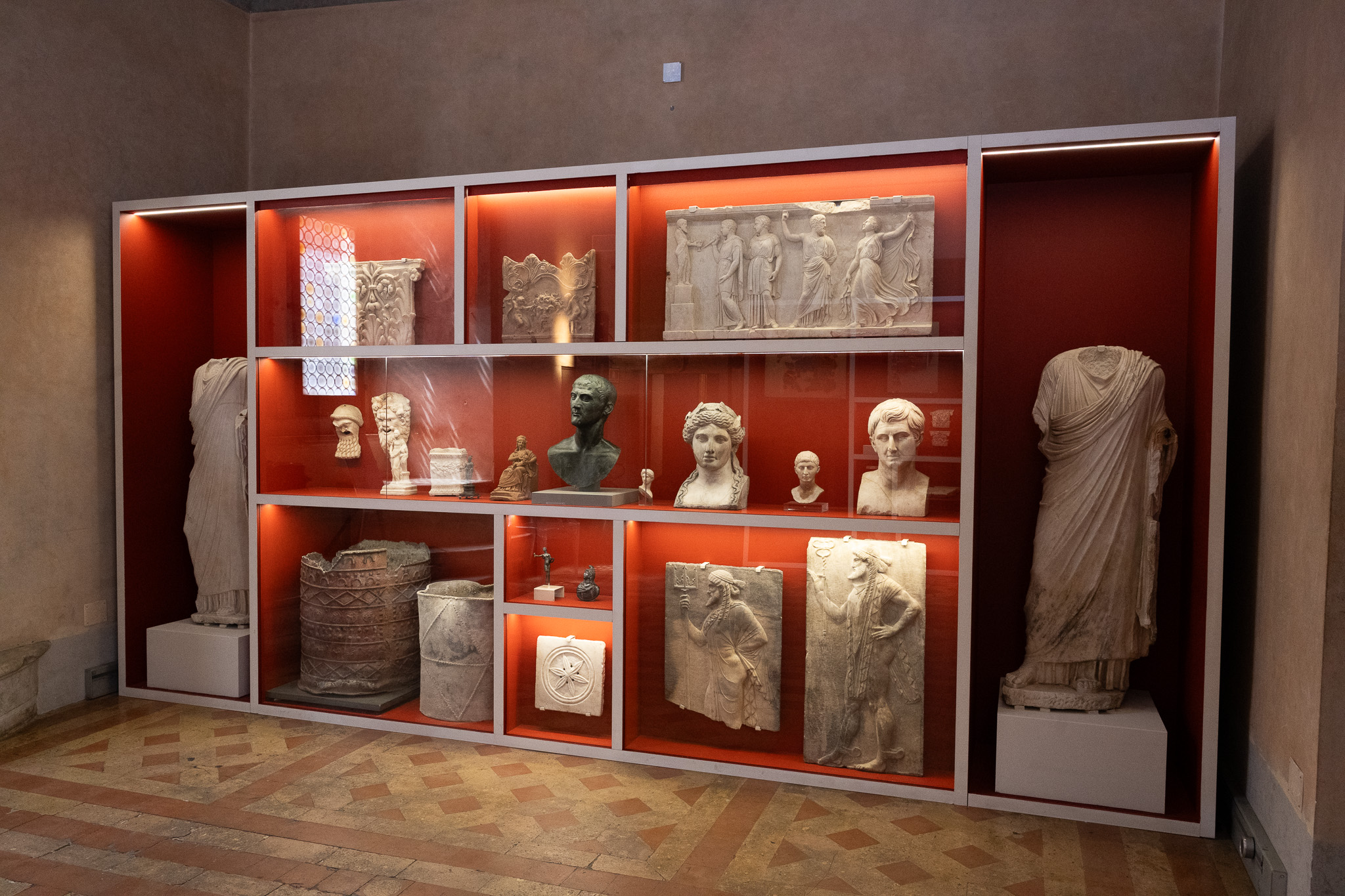
Wunderkammer. pa-erco@cultura.gov.it
The first of its seven sections is a Wunderkammer, inspired by Renaissance collections of rare and precious objects, considered the predecessors of modern museums. Unlike those in a Renaissance Wunderkammer, which brought together natural specimens, works of art, jewelry, scientific tools, and objects from distant lands, the 42 artifacts here in two exhibition cases weren’t rarities or treasures and didn’t belong to a single royal family. Rather they are among the best-preserved artifacts discovered during excavations. These locally made marble statues, busts, colorful frescoes, semiprecious jewelry, household shrines and bronze candelabra offer a cross-section of the quality of life, artistic production, and cultural level reached by Herculaneum shortly before its destruction in 79 AD.
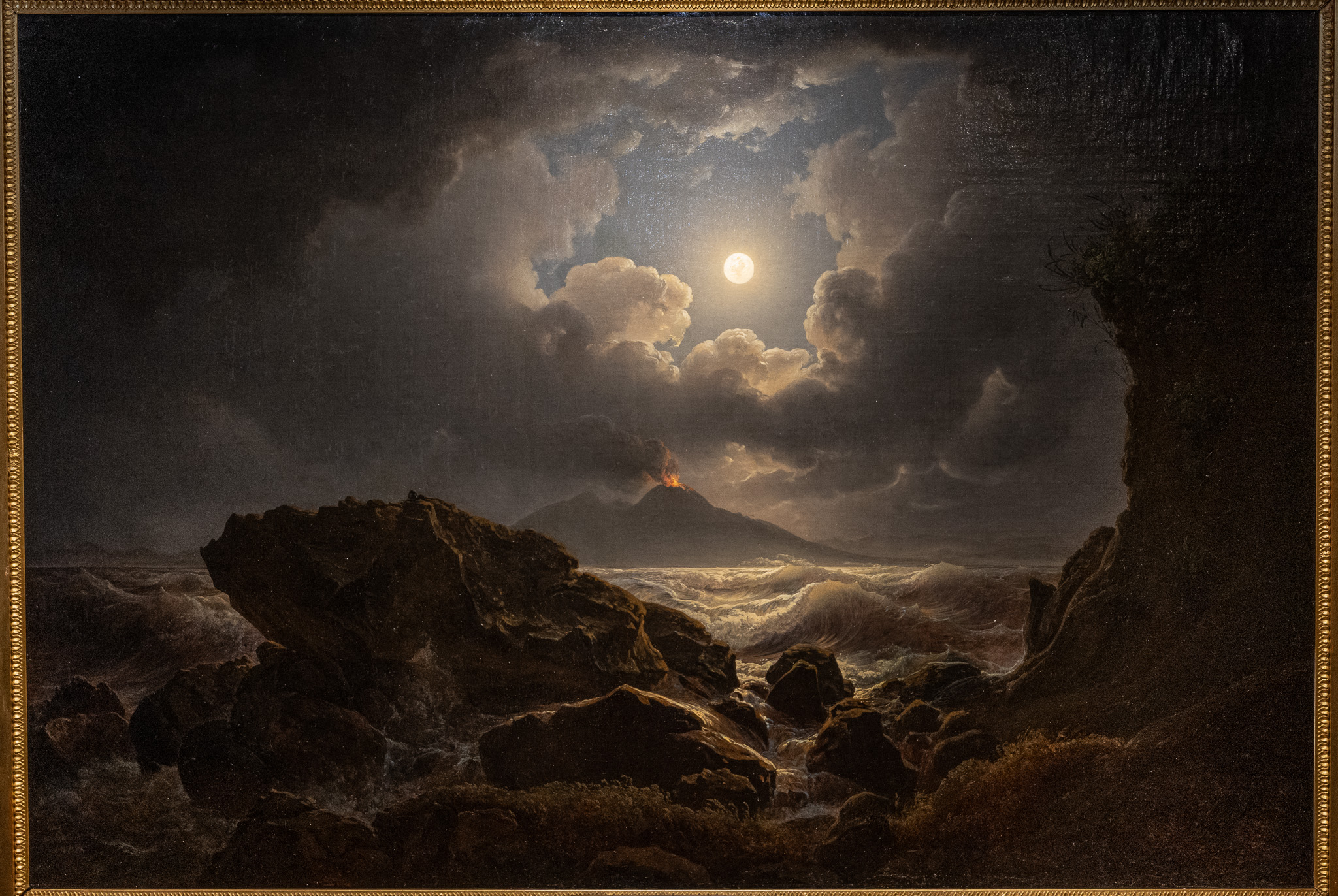
Gale in the Bay of Naples by Joseph Rebell (1822). pa-erco@cultura.gov.it
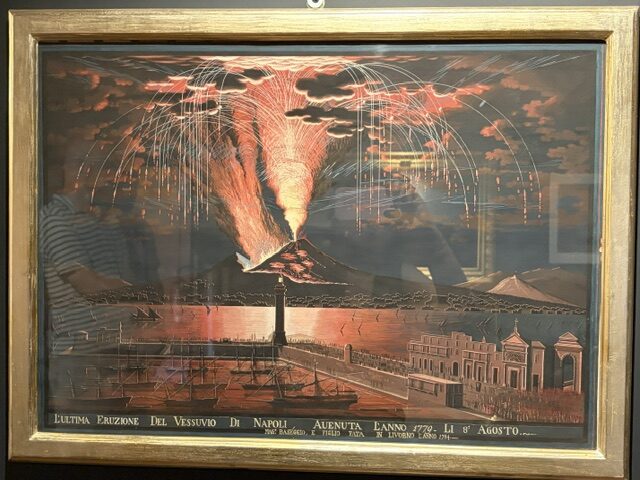
Night view of the 1779 eruption of Vesuvius, tempera painting by Giacomo and Antonio Bassano (1784). Lucy Gordan
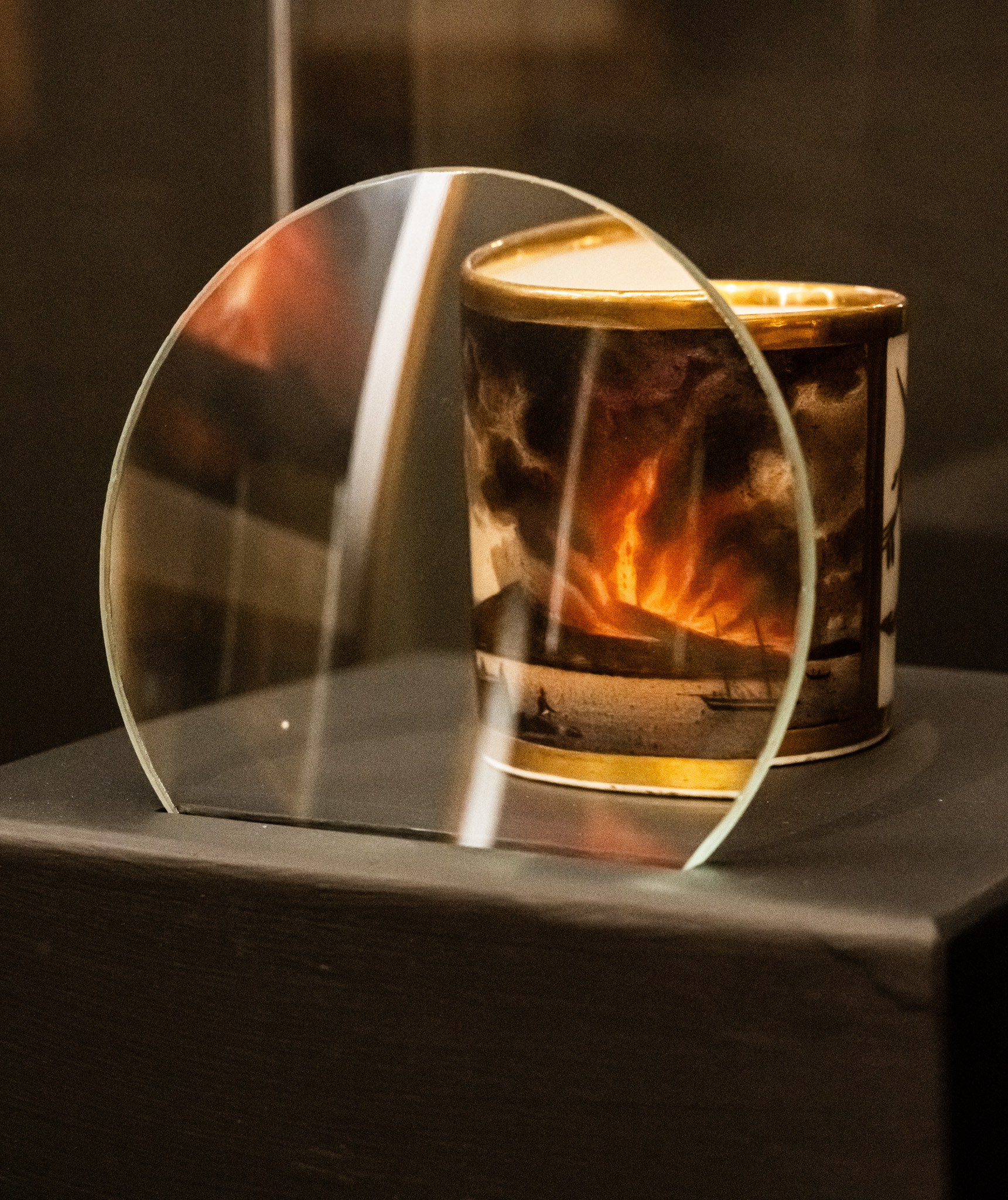
Cup produced by Poulard Pard. pa-erco@cultura .gov.it
The second section concerns the eruption itself. Audiovisual installations, plus paintings, prints and decorative arts illustrate the tragic event through the imagination of artists, writers, and scholars from all over northern Europe on the Grand Tour. On display alongside the views by Pierre-Jacques Voliare are tempera by Giacomo and Antonio Baseggio (1784), Gale in the Bay of Naples at Moonlight by Austrian Joseph Rebell (1822) and a rare porcelain cup of Neapolitan Poulard Prad manufacture depicting Vesuvius’s eruption in 1779. All these works and many more not displayed here testify to the fact that Vesuvius had become a cultural icon. For since 79 AD, Vesuvius has erupted many times, the last being in 1944.
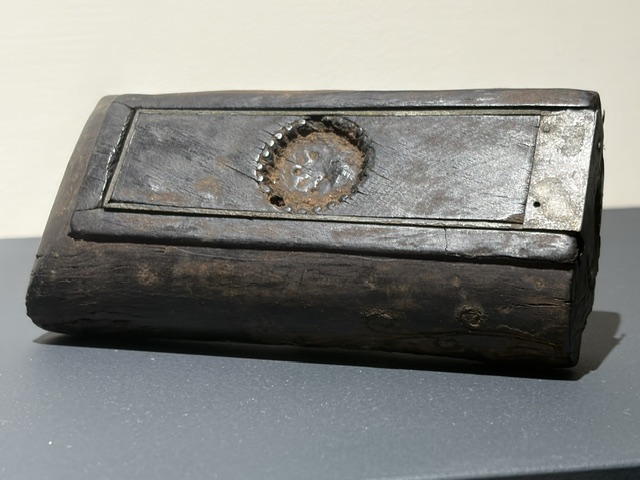
Wooden and bronze coin purse with lock.Lucy Gordan
The third section reconstructs the city in its daily dimension with audiovisual installations and archeological finds from shops and thermopolia, tabernae, popinae, and cauponae, all names for ancient fast foods intended for the sale of food and drink ready for consumption on site or to take home. They were also places of social interaction, where people gathered to meet, converse, and encounter individuals from different backgrounds and social classes. So, wherever people gathered, they could also play games.On display here are single recently-minted coins, a mound of coins melted together, a terracotta dice shaker (fritillus), which helped to prevent cheating, and ivory dice (for gambling, even if restricted by law, was THE favorite pastime), a wooden and bronze coin purse with a metal lock, charred wicker baskets, and various pieces of market scales.
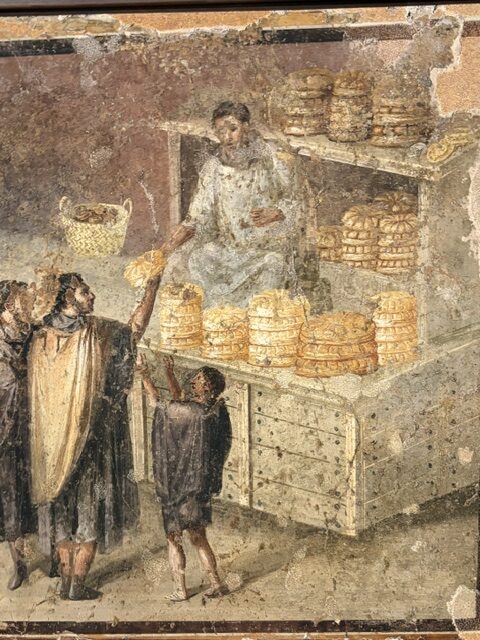
Fresco of a bakery. Lucy Gordan
The fourth section concerns the importance of bread. On display here are some 25 metal oven pans and molds from the bakery (pistrinum) of baker (pistor) Sextus Patulcius Felix and a fresco of a bakery, the first of several food and wine frescoes displayed in the exhibition on loan from the MANN: the others are of figs (Herculaneum’s favorite fruit), peaches, a goose, fish, wine, and banquets. These decorations reflected the importance of food, the bounty of the surrounding land, and snapshots of contemporary conviviality.
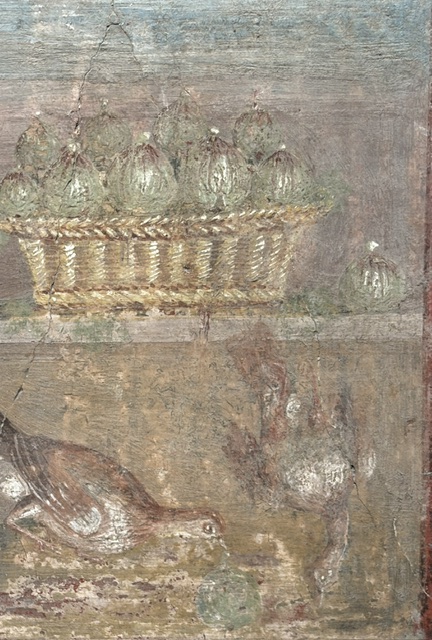
Fresco of figs. Lucy Gordan
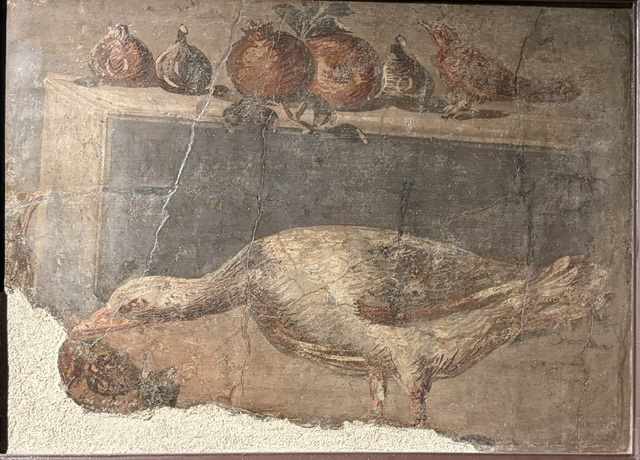
Fresco of a goose. Lucy Gordan
The route then leads into the intimacy of the domus or house, the pantry, where food was stored for later consumption, and the kitchen: mortars metal and terracotta pots, casseroles and organic remains-cereals, nuts, legumes, olives, pulses, shellfish-uncovered during excavations, document the daily varied diet of the ancient inhabitants of Herculaneum, offering an authentic insight into their preparation and eating habits.
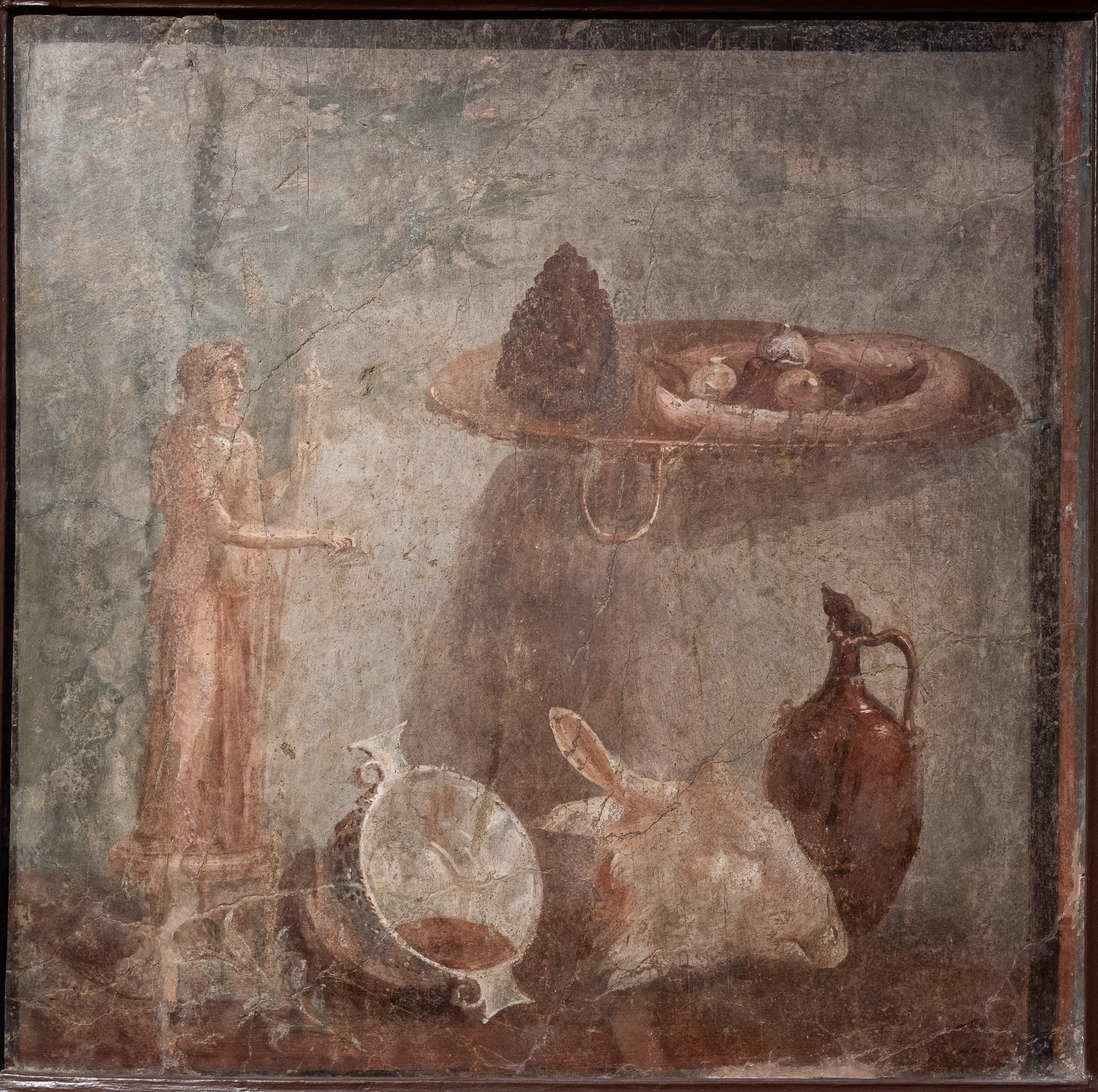
Fresco of wine. pa-erco@cultura.gov.it
Food is followed by wine, the protagonist of one of the most flourishing economic activities in ancient Campania. In his Naturalis Historia Pliny the Elder celebrated Falernian as one of the most renown local wines, but wine was also a bridge to the divine, linked to the cult of Bacchus, God of wine, fertility, and ritual intoxication. Besides marble chair feet depicting busts of Bacchus is a charming small bronze statue of a young lady with the ritual libation bowl (patera) making an offering.
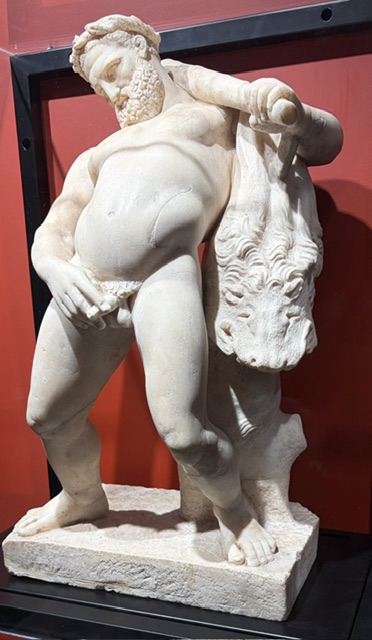
Statue of Hercules. Lucy Gordan
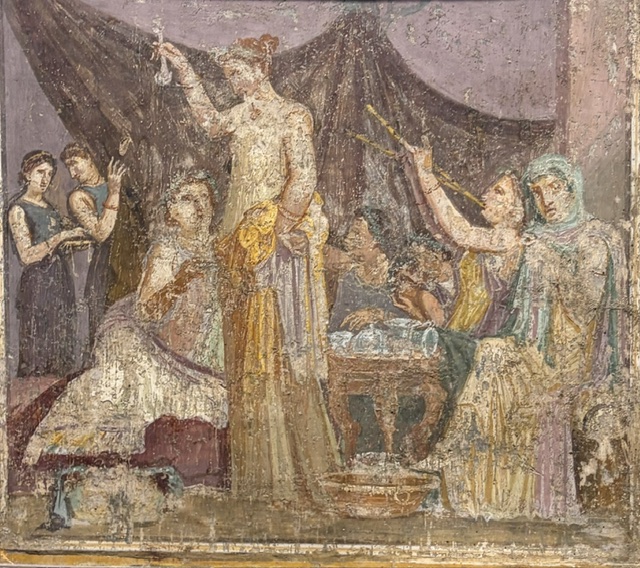
Fresco of a banquet. Lucy Gordan
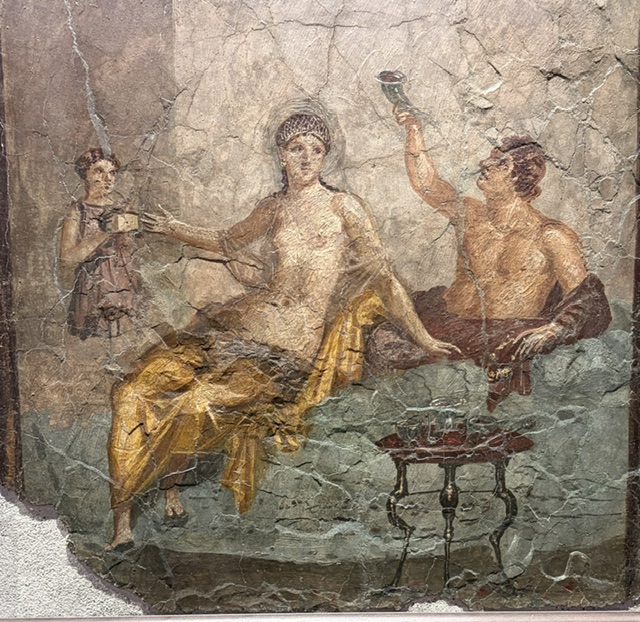
Triclinia. Lucy Gordan
The first artifact in the final section, “Meals and Banquets”, is a larger-than-life white marble statue of wine-loving Hercules, best known for his strength, but here dead drunk and urinating. Excavated in 1930 in Herculaneum’s most luxurious villa the Casa dei Cervi, it probably was placed between the villa’s two large dining areas. Also on display are glasses, plates, cups, serving dishes, silver and bronze tableware, numerous table decorations (man with a pig and a hare, and of course a larva convivalis, the tiny sliver skeleton to remind guests to enjoy life’s pleasures, for examples), a bronze bell for summoning servants, and oil lamps. The final artifact is a monumental marble meal-time sundial.
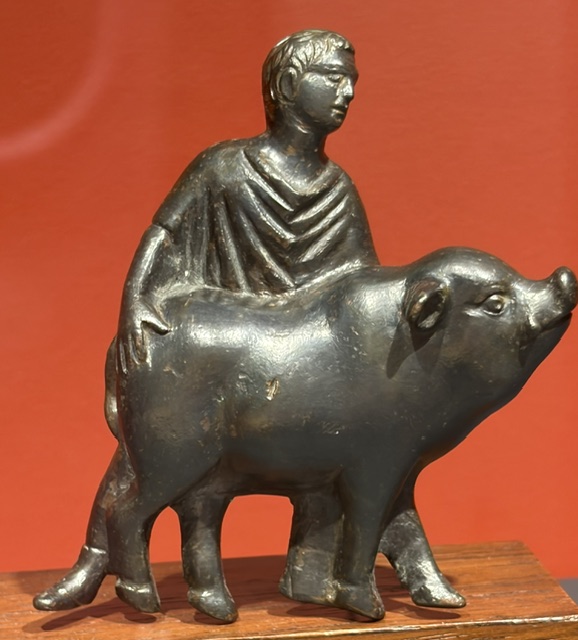
A banquet ornament of a man and a pig. Lucy Gordan
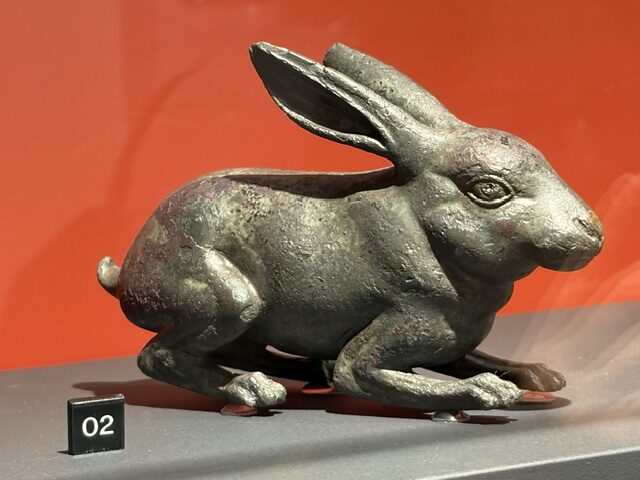
A hare banquet ornament. Lucy Gordan